This is an island floating on the edge of the Pacific. Its story is not written by a single ethnic group, but is a long epic about flow, conflict, the blending of bloodlines, and finally, learning to embrace freedom.
(Click "Read More" below to explore the full chapters)

Thousands of years before written records, the western plains and eastern mountains of this land were already inhabited by the island's original masters. According to modern anthropology and linguistics, this land nurtured dozens of different tribal groups (currently 16 are officially recognized).
They belong to the vast "Austronesian language family." Starting from Taiwan, they spread across the Pacific in dugout canoes, extending as far as New Zealand and Hawaii. At that time, Taiwan was the ancestral homeland of the Austronesian world.

As the Age of Discovery began, Portuguese sailors exclaimed "Ilha Formosa!" (Beautiful Island). Soon after, the Dutch occupied Tainan (Fort Zeelandia) and the Spanish occupied Tamsui (Fort San Domingo).
This is why legends of the "Red Hairs" still circulate today. When the Dutch asked the Siraya people "Where is this place?", the answer "Tayouan" eventually evolved into the name of this island—"Taiwan."

With Koxinga's expulsion of the Dutch and the Qing Dynasty's rule, ancestors from Fujian and Guangdong crossed the "Black Ditch" to escape poverty.
Due to the ban on bringing families, they intermarried with Plains Indigenous women. Over centuries, they evolved from sojourners into "Old Taiwanese," with Taiwan becoming their true home rather than just a temporary settlement.

In 1895, Taiwan was ceded to Japan. This 50-year rule severed the political link with China. While bringing suppression, Japan also introduced modernization: sanitation, railways, and electricity.
This was a critical turning point. Taiwanese people retained Han culture but absorbed Japanese modern civilization, creating a unique hybrid identity distinct from China.

In 1949, the Nationalist government retreated to Taiwan. Unlike earlier settlers, these were "ruling-type immigrants" arriving with a regime and an army.
For locals, this felt like "re-colonization." Martial law and the White Terror suppressed local culture to enforce a Chinese identity. This top-down imposition sowed the seeds of future conflict and the scars of the February 28 Incident.

The older generation often faced a tug-of-war between "paternal nostalgia" for a distant China and their reality in Taiwan, creating identity anxiety. This is often reflected in the Military Dependents' Villages.
However, for today's youth born in a democratic Taiwan, this confusion is non-existent. They do not need a distant ancestral origin to define themselves; the land beneath their feet is their only home.

When Taiwan elected its first president directly, we finally ended the destiny of "being defined" by others. The scars of history are healing as time passes.
Today's Taiwan is no longer just adapting for survival, but is a free nation capable of embracing different memories, where a new generation can confidently say, "I am Taiwanese."

Modern Glory of Indigenous Peoples
We must turn our gaze back to the original inhabitants. Indigenous culture demonstrates breathtaking vitality, preserving unique social systems and embracing life with "spirited souls."
Whether shining on the international sports stage or serving on the front lines to defend our home, our Indigenous friends have made indelible contributions to the peace and glory of this island.

This is the primary official and common language in Taiwan. Used in government, education, and business, Taiwanese Mandarin has developed its own unique accent and vocabulary, often described as gentler than in other regions.

This is the most widely spoken native mother tongue. It is specifically referred to as "Taiwanese Hokkien" or simply "Taiwanese" because, over centuries, it has been influenced by Japanese.
Many loanwords (e.g., ballpoint pen, gas, truck) are derived from Japanese. While usage among the youth is declining, the government is actively promoting a "Mother Tongue Revival" to preserve this cultural legacy rooted in traditional markets and daily life.
The Hakka people traditionally settled in Taiwan's hilly regions. Although both Hakka and Hokkien originated from southern China, they are mutually unintelligible.
An interesting phenomenon exists for Hakka people born between 1966-1976. Due to the social environment of that era favoring Mandarin and Hokkien, this generation is often bilingual, speaking fluent Hokkien alongside their native Hakka tongue.
Before massive Han migration, Taiwan was home to diverse tribes. The western plains were inhabited by "Plains Indigenous" peoples. City names like Tainan's "Tayouan", Kaohsiung's "Takao", and Taipei's "Bangka" have roots in Indigenous languages.
Today, the languages of the 16 officially recognized tribes (like Amis, Paiwan, Atayal) are protected as national languages and taught in schools.
Before 1945, Japanese proficiency in Taiwan reached 70%. Due to historical ties and cultural influx, Japanese remains the most popular second foreign language after English.
Additionally, with the rise of new immigrants, languages such as Vietnamese, Indonesian, and Thai are becoming increasingly visible.
| Category | Approx. Population | Key Features |
|---|---|---|
| Taiwanese Mandarin | 95% | Universal usage; soft accent. |
| Taiwanese Hokkien | 70% | Largest mother tongue; dominant in markets. |
| Taiwanese Hakka | 19% | Concentrated in hilly regions (Taoyuan, Miaoli). |
| New Immigrant Langs | 3.5% | Vietnamese, Indonesian, Thai (Growing). |
| Indigenous Langs | 2.5% | 16 recognized tribes; roots of place names. |
Taiwan is an exquisite and diverse island. North to South is approximately 394 km, and East to West at its widest is about 144 km, with a total area of about 36,193 square kilometers.
Despite its compact size, the vertical variation is astounding. Mountains and hills cover 70% of the total area, meaning our daily lives are concentrated in the remaining 30% of flat land.

In Taiwan's news, you will often hear the term "The Guardian Mountain of the Nation" (護國神山). It refers to two different things:
Due to Taiwan's location, we frequently face Typhoons from the Pacific Ocean (East). This mountain range, with an average height of over 3,000 meters, acts as a critical "wall." When a solid typhoon hits the Central Mountain Range, its structure is often weakened or destroyed. This "Typhoon Cutter" protects the majority of the population living on the western plains (including Taipei, Taichung, and Kaohsiung).

Because of the numerous mountains, Taiwan offers a "rapid landscape switch" rarely seen elsewhere. You can shop in modern Taipei and, within 3 to 4 hours, drive up to a high-altitude area of 3,000 meters.
Popular Choices: Apart from the symbolic Jade Mountain (Yushan), Hehuanshan is the most accessible high mountain. Xueshan (Snow Mountain) offers a chance to see rare subtropical snow scenes during January to March.

In Taiwan, what determines your outfit is the "wind direction."

Located on a tectonic boundary, Taiwan experiences frequent earthquakes. Locals have developed a darkly humorous survival philosophy:
So, if an earthquake strikes and you see Taiwanese people calmly drinking their Bubble Tea, feel free to stay calm too.
Humidity: Taiwan is humid all year round. While summer can feel sticky, the upside is that you never have to worry about your nose bleeding from dryness in winter.
In Taiwan's coffee shops or food courts, you often see a strange sight: a phone, an umbrella, or even an expensive bag left on a table with no one sitting there. This is not lost property; it is Taiwan's unique "occupying seats" culture.
This reflects an extremely high level of Social Trust. Many foreigners living in Taiwan often develop a habit of "negligence," thinking that even if they lose their wallet, a kind person will take it to the police station.
A Gentle Warning: While Taiwan is indeed safe, crime is not non-existent. Please enjoy this sense of security but do not lose your basic alertness. Looking after valuables is still a traveler's responsibility.

Unlike Japan or Australia with fixed garbage collection points, Taiwan uses a unique "street collection" model.
When Beethoven's Für Elise plays in the alleys, it's not an ice cream truck—it's the signal. Residents must carry their garbage bags out and wait for the yellow truck to stop. This design of "people chasing trucks" unexpectedly creates a rare social moment in modern cities, where neighbors are forced to meet for five minutes every evening to exchange life updates.

Unlike the strict zoning of residential and commercial areas in the US, Taiwan resembles Japan in its habit of "Mixed-use Housing"—homes upstairs, shops downstairs.
The peak of this convenience is the high density of Convenience Stores. Even in a rural place like Wandan, Pingtung, you will find the glow of a 7-Eleven or FamilyMart around the corner. The rural-urban gap isn't about whether you can buy coffee, but whether the view outside is a skyscraper or a rice paddy.

Walking on the streets of Taiwan, you will find that "freedom" here is embodied in the inclusivity of diverse values. You might see a rainbow flag flying at a coffee shop right next to a traditional, incense-filled Mazu temple; or see fashionable youth squatting by a roadside stall eating a 30 NTD bowl of Braised Pork Rice.
This mix extends to our democracy. Taiwan is the first country in Asia to legalize same-sex marriage and the first in East Asia to elect a female president. Perhaps because of our complex history of being colonized, we know the pain of being defined by others, making us more willing to embrace diverse identities.

If you know a little Mandarin, you will find that Taiwanese speech sounds particularly "soft." We rely heavily on Sentence-final particles to modify our tone. Without them, we feel we sound too fierce or serious.
In Taiwan, you will definitely hear this phrase 100 times a day: "Bu-hao-yisi". Literally, it means "Embarrassed," but in life, it equals "Excuse me," "Sorry," "May I," and even "Thank you."
Interestingly, while many Taiwanese think they are more direct than the Japanese, our communication is far less direct than in China. Our speech is full of buffering. We rarely say a hard "No," preferring to wrap a rejection in a string of "Bu-hao-yisi" to avoid making the other person feel awkward.
If you understand Mandarin and Taiwanese (Hokkien), the streets of Taiwan are a comedy show. Shops love using Homophones for naming. Some jokes only make sense when read in Taiwanese.
Classic Case: A shop named "I'm So Gay". Foreign tourists might be shocked, but it's actually a stall selling Salted Crispy Chicken. In Taiwanese Hokkien, "Salted Crispy Chicken" (Kiâm-so-ke) sounds exactly like the English "I'm so gay." This is our unique, cross-lingual sense of humor.

Walk into a 7-Eleven or a Bubble Tea shop, and the staff might fire a machine-gun string of questions at you. Don't panic, they are usually asking these three things:
I recently discovered a beautiful linguistic harmony: "Taiwanese Flavor" (台灣味) is pronounced Táiwān wèi in Mandarin, Tâi-uân-bī in Taiwanese Hokkien, and toiˇ vanˇ mi in Hakka. These remarkably similar sounds across languages inspired the name TaiwanMe.
Tracing the roots further, the name "Taiwan" itself originates from the Siraya indigenous term Taywan. Early Siraya people referred to the sandbars near the Taijiang Inner Sea as Teyoan or Taioan, meaning "the place where strangers or foreigners live."
To me, TaiwanMe embodies this fascinating cultural tapestry—a dialogue between the diverse ethnic groups and histories that define our island.
It started with a moment of realization. While hosting international students, I watched them queue endlessly for commercialized "hotspots" and trendy shops. As a local, I found myself unable to share the deeper, authentic stories of my own land.
It wasn't until a general education class, where a classmate vividly described the very alleys I cycled through every day—my rental place, the campus corners—that it hit me: Taiwan isn't mundane; we've simply lost the energy to explore it amidst our busy lives.
Our mission is simple: The Real Taste of Taiwan.
You won't find cliché tourist traps here. Instead, we guide you to the authentic scenery hidden in ordinary alleys—stories worth telling. Whether you are a first-time traveler or a long-time resident, we hope to accompany you in finding that unique, irreplaceable Taiwanese sentiment.
Many visit Taiwan, but few truly see it.
TaiwanMe was created to unveil the island’s best-kept secrets. Whether it's the profound indigenous culture of Pingtung or the mystical Water Lantern ceremonies in Keelung, we exist to help you find the real taste of Taiwan.
But our vision goes deeper than just tourism. We aim to not only offer foreign travelers a genuine opportunity to deeply understand Taiwan, but also to inspire locals to rediscover the beauty of the land they call home. We believe every corner of this island has a story waiting to be told—and heard.
To be completely honest with you—we are just getting started. We are a young platform, and we know we have a long way to go. We believe that trust and reputation are earned over time, not overnight. Right now, our primary focus is on pouring our hearts into creating the best content possible, rather than seeking commercial spotlight or formal advertising partnerships. We want to make sure we are truly providing value before we ask for your investment.
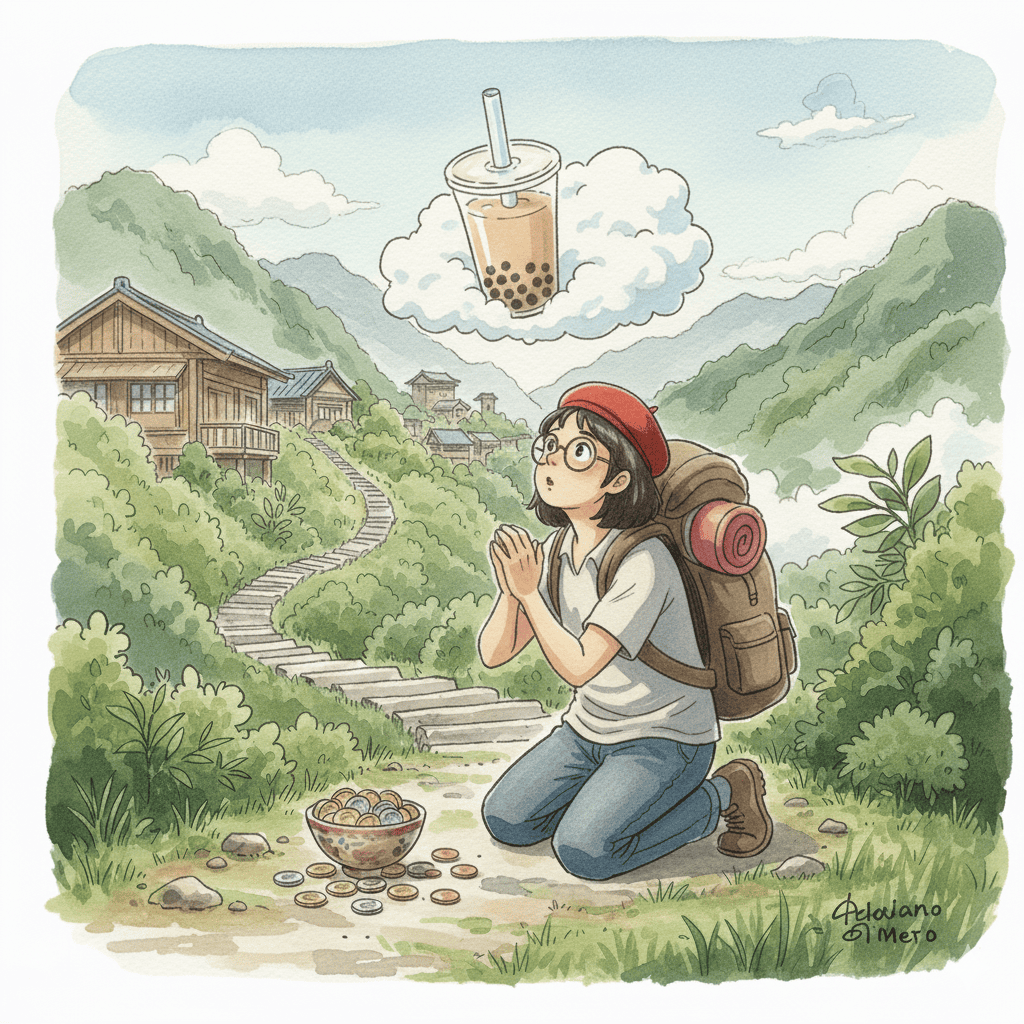
That said, we never say no to a good conversation. If our mission resonates with you, or if you see the potential in what we are building—even while we are still in our early days—we would be honored to hear from you. Whether you have a suggestion, a story to share, or simply want to support a growing team, please feel free to reach out.
| Coin | Network | Address |
|---|---|---|
| BTC | Bitcoin |
393SydmjKD8fKYSaiFhZYvxPNi4rgSyzGA
|
| ETH | ERC20 |
0x7563Fa328f07373cb8F458EefDcc5e9FFF657D3C
|
| BNB | BSC (BEP20) |
0x7563Fa328f07373cb8F458EefDcc5e9FFF657D3C
|
| BNB | ERC20 |
0x7563Fa328f07373cb8F458EefDcc5e9FFF657D3C
|
| USDT | BSC (BEP20) |
0x7563Fa328f07373cb8F458EefDcc5e9FFF657D3C
|
| USDT | ERC20 |
0x7563Fa328f07373cb8F458EefDcc5e9FFF657D3C
|
| USDC | BSC (BEP20) |
0x7563Fa328f07373cb8F458EefDcc5e9FFF657D3C
|
| USDC | ERC20 |
0x7563Fa328f07373cb8F458EefDcc5e9FFF657D3C
|
| BCH | Bitcoin Cash |
qprnfkc6x5k2zc5wrfv0x78zv34dvs7nlswhfmzep0
|
Coming Soon...